Survivor conversations - an important element in working with next of kin
This article is written based on Swedish conditions and translated with AI.
By offering conversations to relatives after a resident's passing, the operation can show compassion, collect valuable feedback, and support in the grieving process. This is in line with the ethos of palliative careand with the guidelines of the Swedish Palliative Registry, where support does not end at the time of death.
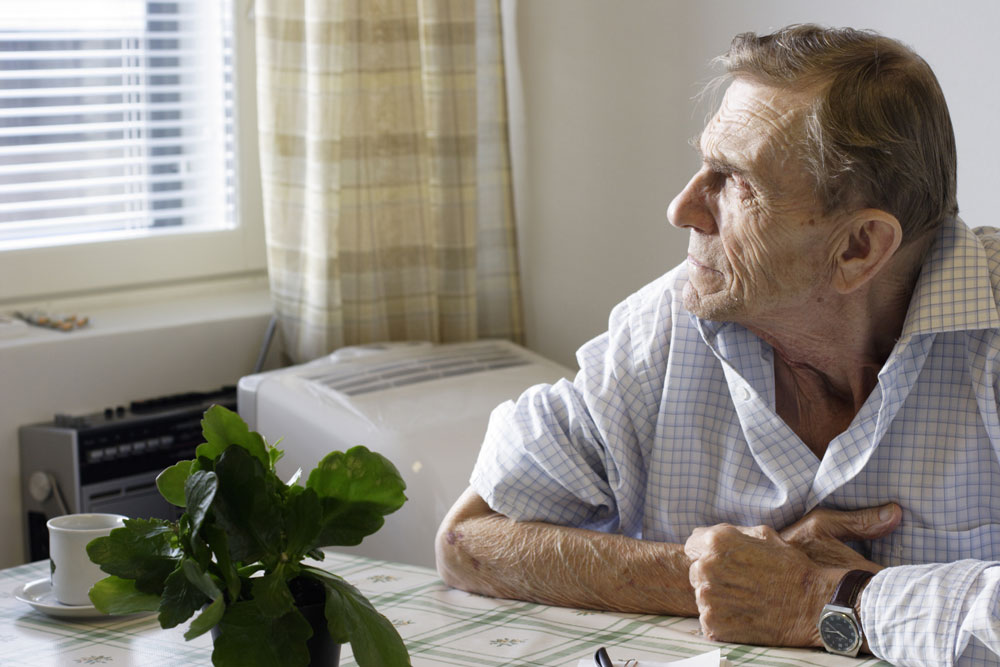
 Bild från Summer Stock
Background and Objectives
Many relatives of dying residents often find themselves in a difficult situation, dealing with anxiety, exhaustion, and feelings of powerlessness.
The offer of bereavement discussions is an established practice that can meet this need. The goal is to:
- Support the relatives' grief management by providing space for questions and clarifying uncertainties.
- Identify relatives at increased risk of complicated grief and guide them further if needed.
- Enable feedback on the operations and care period.
Practical Implementation – A Guide from Theory to Practice
For the conversation to be meaningful and secure, a thoughtful structure is required.
Here, practical guidelines based on The Swedish Palliative Registry's recommendations are summarized.
Who is offered a conversation?
At least one relative should be offered a conversation for each death. If several people want to participate and agree on this, it is perfectly fine.
Documentation of offers and responses is important.
Who conducts the conversation?
The conversation should be led by a nurse with the support of an auxiliary nurse who knew the deceased well. The nurse has the overall responsibility for the professional level, while the auxiliary nurse can contribute personal memories. The team's interaction and clear role distribution facilitate the flow.
When and where should it take place?
An appropriate time is about 6-8 weeks after the death. The conversation should take place in a quiet place with security and seclusion, for example, at the unit or via telephone depending on the preference.
How long should the conversation be and how is it structured?
The conversation should not be longer than 90 minutes, which is communicated in advance. A basic structure with pre-formulated questions facilitates. It is crucial with guidelines for handling difficult questions, complaints, and documentation.
Approach and Professional Support
A professional and compassionate approach is crucial for quality.Active listening
Be fully present and give the relatives full space to speak without feeling rushed.
Non-judgmental attitude
Receive all emotions – such as anger, relief, or grief – without judging. All expressions are normal in the individual process of grief, which has no "normal" timeframe.
To Identify and Support in Case of Complicated Grief
One of the objectives is to identify increased vulnerability. Risk factors include sudden death, very close relationship, or insufficient social network.Support in case of complicated grief
For those who struggle, knowledge about support resources is needed:
Health center and family doctor: First-line support and further referral.
The church and pastoral care: Spiritual and conversational support.
Social worker and psychologist: Professional processing via region or private.
Crisis and on-call companion: 24-hour telephone support.
Grief groups: Meeting place with others in a similar situation.
The warning signs of overwhelming grief are when it affects everyday functions such as sleep and appetite over a long time. For acute crises, there is on-call priest, psychiatric emergency or 112.
To Honor the Deceased and Handle the Practical
Many nursing homes have traditions to honor and remember the residents who have passed away. This is an important part of the whole. - Memorial moments: Short occasions where staff and residents gather. - Memory book or -wall: A common room for pictures and memories. - Personal rituals: Adapted to the personality of the deceased.Practical information should also be clearly available, such as the handling of apartment and belongings and access to memorabilia with sentimental value.
Support for the Staff – A Work Task That Requires Care
For the staff to be able to perform this sensitive work, there is a need for:
- Time for preparation, reflection, and recovery.
- The possibility of collegial support after the conversation.
- The opportunity to develop in the art of conversation.
Reflection Questions for Operational Development
For care staff:
- How can we best honor and remember the residents who pass away?
- What support do we need to better understand grief processes?
- Are you aware of the different support resources available?
- How can we better inform about support in case of complicated grief?
For manager, nurse, occupational therapist, and physiotherapist:
- How can operations systematically work to honor deceased residents?
- What knowledge do we need about grief processes to better support relatives?
- Do we have clear information about support resources to share?
- How can we cooperate with external support actors?
For residents and relatives (during evaluation):
- How did you experience that the deceased was honored by the operations?
- Which support was most meaningful for you in your grief?
By integrating these principles and practical guidelines into operations, we make bereavement discussions a natural, important, and caring part of the entire care chain – even after the relatives have said their last goodbye.
Erland Olsson
Specialist Nurse
Sofrosyne - Better care every day
Aktuellt i media
-
2025-12-18 04:00
16 Sjukdom och död
Survivor conversations - an important element in working with next of kin
infoBild från Summer Stock - 2025-12-15 04:00 17 Psykisk hälsa
- 2025-12-11 04:00 07 Riskhantering
- 2025-12-08 04:00 06 Dokumentation
- 2025-12-03 04:00 06 Dokumentation
- 2025-12-01 04:00 02 Värdegrund